Product Filter

فریم خود را انتخاب کنید
فریم محصولات
توان (KW) خود را انتخاب کنید
توان محصولات
ولتاژ خود را انتخاب کنید
ولتاژ محصولات

synchronous motor

محصولی موجود نیست

Table of contents

What Is a Synchronous Motor? Differences from an Asynchronous Motor and Their Applications

A **synchronous motor** is one of the most widely used electrical machines in various industries. Thanks to features such as constant speed and high efficiency, synchronous motors play a key role in improving the performance and productivity of industrial systems. These motors are widely used in applications where precise speed control and power factor correction are important.
Understanding the technical specifications of these motors and their differences from **asynchronous motors** is essential for making the right choice when designing electrical systems and optimizing the performance of industrial equipment.
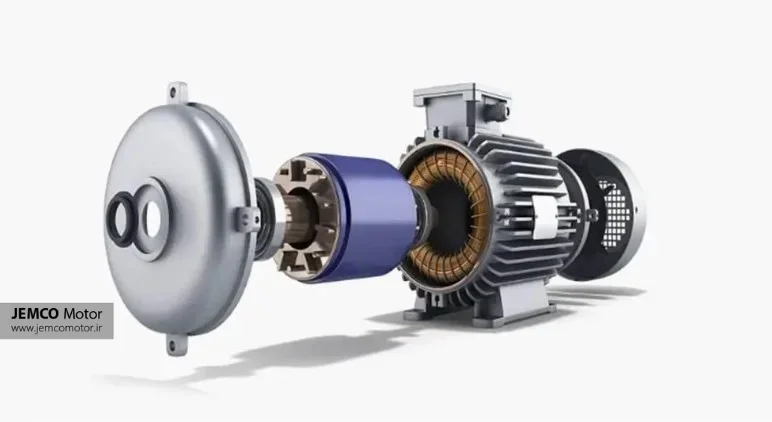
In this image, you can see an explosion-proof electric motor.

Understanding the Structure and Components of a Synchronous Motor

A **synchronous motor** consists of two main parts: the stator and the rotor.
The stator, which is the stationary part of the motor, includes windings that generate a rotating magnetic field when powered by a three-phase AC supply. The speed of this rotating magnetic field depends on the supply frequency and the number of poles in the motor.

The rotor is the rotating part and produces its own magnetic field using DC-excited windings or permanent magnets.
The important point is that the rotor speed in a **synchronous motor** is exactly equal to the speed of the stator’s magnetic field — the term “synchronous” refers to this speed synchronization.
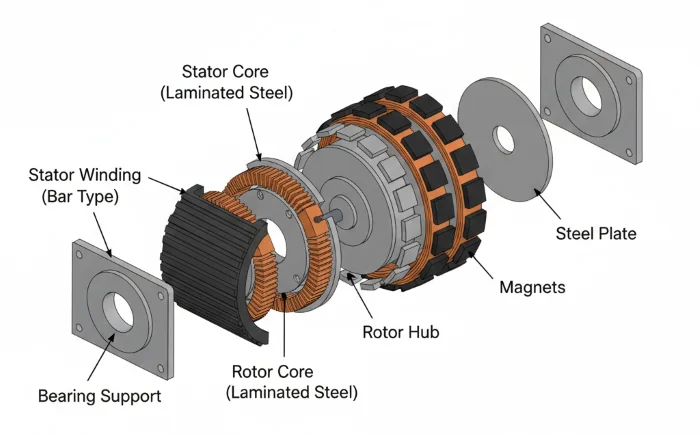
In this image, you can see the components of a synchronous motor.

How a Synchronous Motor Operates</h2
Here is the English translation of your text:

In summary, a **synchronous motor** operates based on the principle of the rotor speed matching the rotating magnetic field of the stator. This means the rotor always turns at the same speed as the stator’s magnetic field, and therefore, the slip in this motor is zero.

Comparison of Synchronous and Asynchronous Motors

Comparing a **synchronous motor** with an asynchronous motor can help in selecting the right motor and better understanding their applications. Some of the most important differences between these two motors include:

  • Power Supply:
    A synchronous motor has a stator with three-phase windings powered by AC. Its rotor produces the required magnetic field through a separate excitation system (such as DC supply).
    An asynchronous motor also has a three-phase stator, but its rotor generates the necessary magnetic field inductively, without needing a separate power supply.
  • Rotor Speed and Slip:
    One of the most important differences between these two motors is the rotor speed. The rotor speed of a synchronous motor

Let me know if you’d like me to continue the translation for the remaining text.
Here’s the English translation of your text:

The rotor speed of a **synchronous motor** is equal to the speed of the stator’s magnetic field, and therefore, the slip is zero. In contrast, in **asynchronous motors**, the rotor rotates slightly slower than the magnetic field, and this difference in speed is called slip.
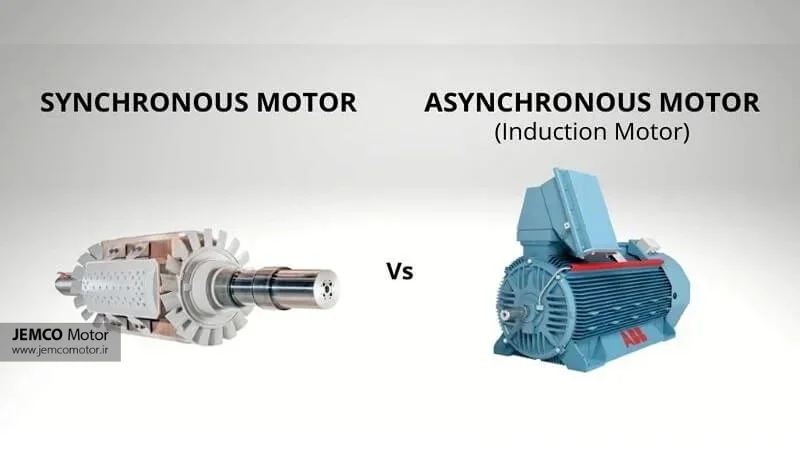
  • Efficiency and Energy Performance: Synchronous motors, due to their exact speed coordination and special design, have higher efficiency and therefore more optimized energy consumption. Asynchronous motors, because of slip and additional losses, generally have lower efficiency.
  • Load Variations: The speed of a **synchronous motor** remains constant under changing load. Load variations only affect the motor torque. In an **asynchronous motor**, an increase in load results in a decrease in rotor speed.
  • Speed Control: Controlling the speed of synchronous motors is more complex than for asynchronous motors, requiring frequency adjustments of the power supply and rotor excitation. **Asynchronous motors**, due to their simpler structure, can be easily controlled by changing the supply frequency.
  • Durability and Maintenance: **Asynchronous motors** have a simpler design, making them more robust and easier to maintain at lower cost. In contrast, the mechanical complexities of synchronous motors require more precise care and maintenance.

This image shows the difference between synchronous and asynchronous motors.

Applications of Synchronous Motors in Various Industries

Some key applications of **synchronous motors** include:

  • Used as generators in power plants for electricity generation. Due to precise control and high efficiency, they also play a role in power generation and transmission systems.
  • Used in electrical grids to improve power factor and reduce losses caused by reactive power.
  • Applied in transportation (electric locomotives) and certain electric vehicles because of precise speed and torque control.
  • Used in CNC machines, robotics, and industrial automation equipment where precise and stable performance is required.
  • In medical and laboratory industries, used in devices that require precise and uniform motion.

Advantages and Disadvantages of Synchronous Motors

Synchronous motors, in addition to their wide applications across various industries, offer several advantages. Some of the main benefits include:

  • High Efficiency: Due to their special design and precise speed coordination, energy losses are reduced in synchronous motors, resulting in increased productivity.
  • Constant Speed: A **synchronous motor** provides a constant speed that is not affected by load changes, making it a suitable choice for speed-sensitive applications.
  • Power Factor Control: This motor allows for adjusting the power factor, which helps optimize energy consumption and reduce costs.
  • Precise Torque: Synchronous motors are ideal for applications requiring precise torque control.

Despite these advantages, using a **synchronous motor** comes with certain limitations and challenges. The presence of more complex mechanical components increases manufacturing and maintenance costs. Additionally, due to the more intricate structure, the initial cost is higher compared to asynchronous motors.

Jemco: In Sync with Today’s Complex Industrial Needs

Jemco, one of the largest specialized electric motor manufacturers in Iran, leverages years of experience and technical expertise to offer synchronous motors as a key product in the industry. Jemco’s synchronous motors are specially designed to deliver stable and reliable performance under various environmental conditions, including high temperature, humidity, or heavy loads.

By utilizing modern technologies and international standards, Jemco produces synchronous motors with high build quality and long-lasting durability, meeting the precise needs of industrial applications. These motors, as part of Jemco’s comprehensive solutions, enable optimized energy consumption and improved productivity in industrial projects. For more information and expert consultation, you can contact our specialists. Jemco continually strives to provide high-performance products and reliable services through continuous innovation and technological advancement, ensuring maximum customer satisfaction.


Frequently asked questions

Need help?
Our information is ready to answer.

افتخار همکاری با

درخواست مشاوره

جهت دریافت مشاوره، لطفاً اطلاعات خود را ثبت نمایید. کارشناسان ما در کوتاه‌ترین زمان با شما تماس خواهند گرفت.


sales@jemcomotor.ir


آدرس دفتر مرکزی:
تهران -بزرگراه متوسلیان (فتح) خیابان فتح هفدهم کوچه ایثار 5- پلاک 13

درخواست نمایندگی جمکو

.جهت دریافت نمایندگی فروش محصولات جمکو، لطفاً اطلاعات خود را ثبت نمایید


sales@jemcomotor.ir


آدرس دفتر مرکزی:
تهران -بزرگراه متوسلیان (فتح) خیابان فتح هفدهم کوچه ایثار 5- پلاک 13

Request Consultation

To receive consultation, please register your information. Our experts will contact you in the shortest time.


sales@jemcomotor.ir


Head Office Address:
Tehran - Motossalian (Fath) Highway, 17th Fath Street, Isar 5 Alley - No. 13

JAMCO Agency Request

To receive a sales agency for JAMCO products, please register your information.


sales@jemcomotor.ir


Head Office Address:
Tehran - Motossalian (Fath) Highway, 17th Fath Street, Isar 5 Alley - No. 13