
In today’s industrial world, where efficiency, stability, and reduced operating costs are top priorities, AC electric motors play an irreplaceable role as vital components and the heart of drive systems. Their simple design, high durability, and ability to operate with alternating current—readily available from the power grid—make them the leading choice for nearly all industrial applications, from pumps and fans to conveyors and heavy machinery. The decision to purchase an industrial AC motor is a technical one that directly impacts efficiency, energy consumption, and ultimately, the profitability of your business. In this guide, we will cover all aspects of selection, technical specifications, and essential points in the purchasing process.
For an informed choice, it is essential to know the main components of the motor:
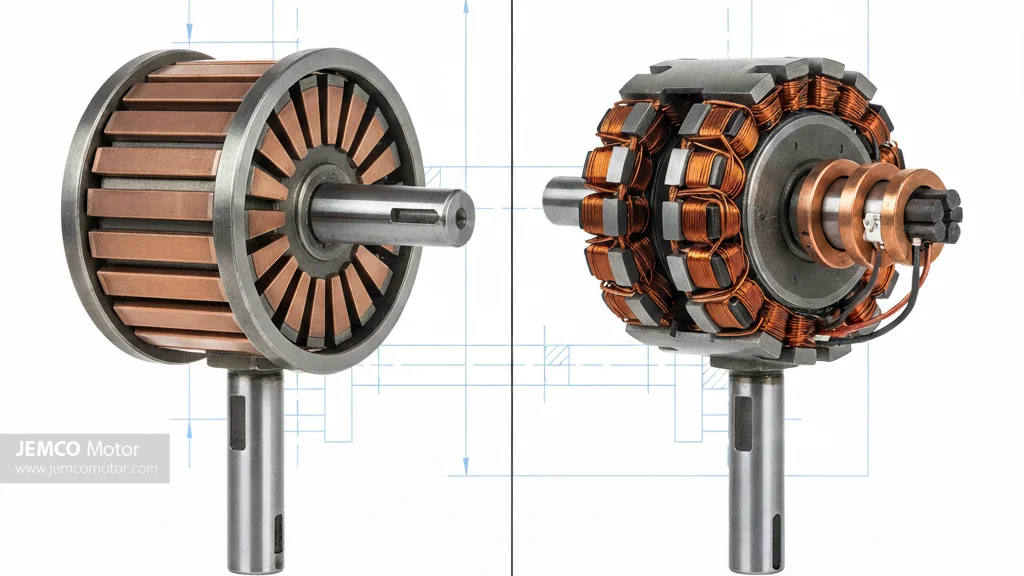
Stator: The stationary part of the motor where the main windings are placed, generating the rotating magnetic field. The stator is usually made of thin, insulated steel laminations.
Rotor: The moving part of the motor located inside the stator. In induction motors (the most common type), the rotor consists of copper or aluminum bars (squirrel cage) that move by induction from the stator’s magnetic field.
Bearings: Components that support the rotor and reduce friction during rotation, playing a key role in the motor’s lifespan.
Frame: The outer casing of the motor that protects internal components and dissipates generated heat. The frame is usually made of cast iron or aluminum.
Three-phase AC motors are the most widely used drives in industry due to their unique features:
| Advantage | Technical description |
| High efficiency | Especially in IE3 and IE4 series, leading to significant energy cost savings. |
| Simplicity of structure | Absence of brushes and commutators (unlike DC motors) results in simpler mechanical design and lower maintenance costs. |
| High reliability | Long operational lifespan and resistance to harsh industrial conditions. |
| Versatility | Precise control of speed and torque using variable frequency drives (VFD). |
In the long run, investing in high-efficiency motors (IE3 and above) ensures fast return on investment through reduced electricity costs.
Understanding the differences between motor types is essential for choosing the right AC motor.

This type is the most common industrial motor. Their operation is based on electromagnetic induction and slip:
These motors operate at a fixed and precise speed, synchronized with the supply frequency (without slip). They are used in applications where speed accuracy is critical, such as generators, large compressors, or precision measuring equipment.
Buying a three-phase AC motor requires careful consideration of the following parameters:
The first step is to accurately calculate the required power (in horsepower HP or kilowatts kW) and torque for the connected load. Choosing a motor with excessive power reduces efficiency and power factor, while choosing one with insufficient power leads to overheating and premature failure.
Explosion-proof motors are designed for environments where flammable gases or dust may be present. These motors are built to high safety standards to prevent any risk of explosion. To view explosion-proof motor prices and explore different models, you can visit the dedicated page.
The international efficiency standard (IE) is the most critical indicator for energy savings. Always prioritize motors with:
These should be your top priority.

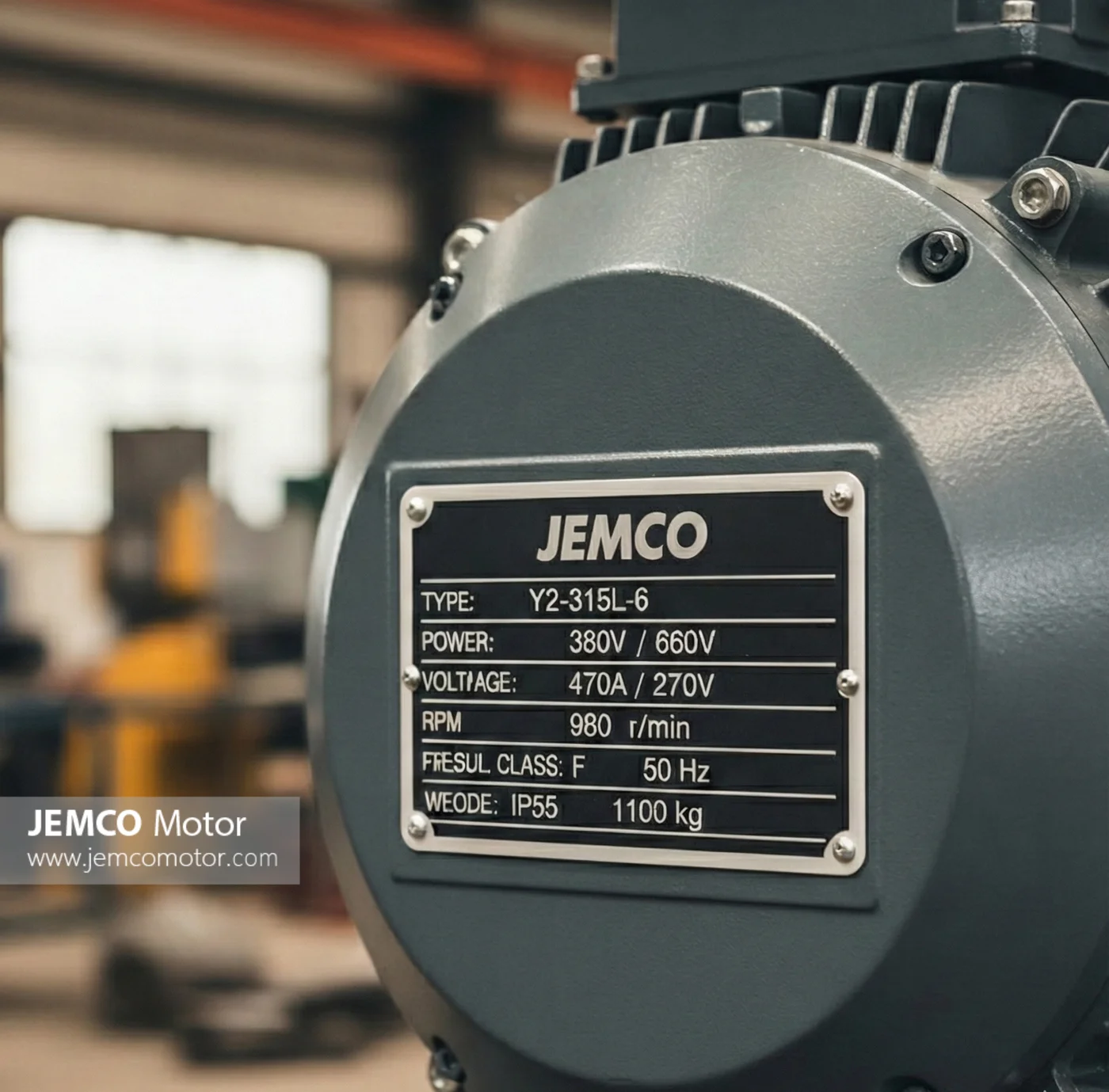
The IP code (Ingress Protection) indicates the motor’s resistance against dust (first digit) and moisture/water (second digit).
The mounting type (such as B3, B5, V1) must be compatible with your machinery frame. Also, the cooling system (such as TEFC or IC411) must be capable of dissipating the heat generated by the motor under full load.
| Technical Indicator | Description and Importance in Purchase |
| Operating Voltage and Frequency | Must fully match the local power grid (e.g., 380 V, 50 Hz). |
| Rated Current | The current consumed at full load. Essential for selecting cables and protective devices (thermal switches and fuses). |
| Power Factor | The ratio of real power to apparent power. A higher power factor (close to 1) indicates efficient energy use and avoids penalties from the utility company. |
| Rated Speed | The speed at nominal frequency and full load (e.g., 1450 RPM). |
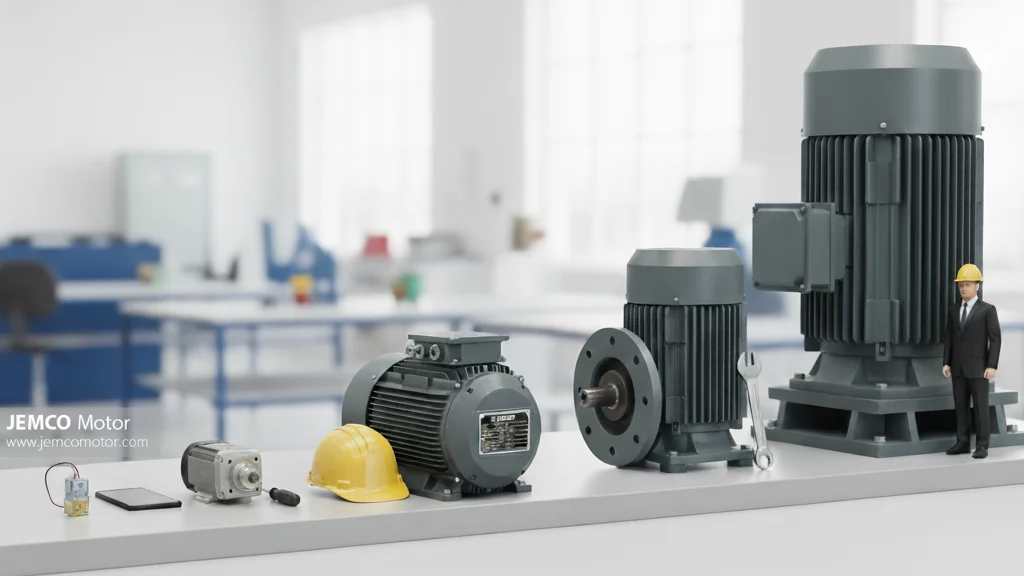
Classifying motors by operating voltage helps you choose the right motor for your operational scale:
Jamco motors are manufactured with high quality and long durability to ensure reliable performance under any conditions. To view products and purchase Jamco motors, visit our dedicated page.
In a competitive market, focusing solely on a low AC motor price can harm you in the long run. Consider the following:
Selecting and purchasing an AC motor is a strategic decision for every industrial unit. This guide emphasized that beyond the initial AC motor price, attention to indicators such as efficiency class (IE3/IE4), protection rating (IP), and precise matching with voltage and torque requirements is the key to achieving maximum efficiency, lowest operating costs, and longest service life. For a successful industrialist, a motor is not just a mechanical component, but a profitable investment.